An SMS is only a handful of words with a few details, and maybe a link. Yet, it can feel remarkably relevant when it reaches you at the right moment. That relevance comes from the context sitting behind those few words. A recent purchase, a website visit, a support interaction, or a campaign response — every activity leaves a small clue about what the customer might need next. But the clues only become useful when they can be seen together.
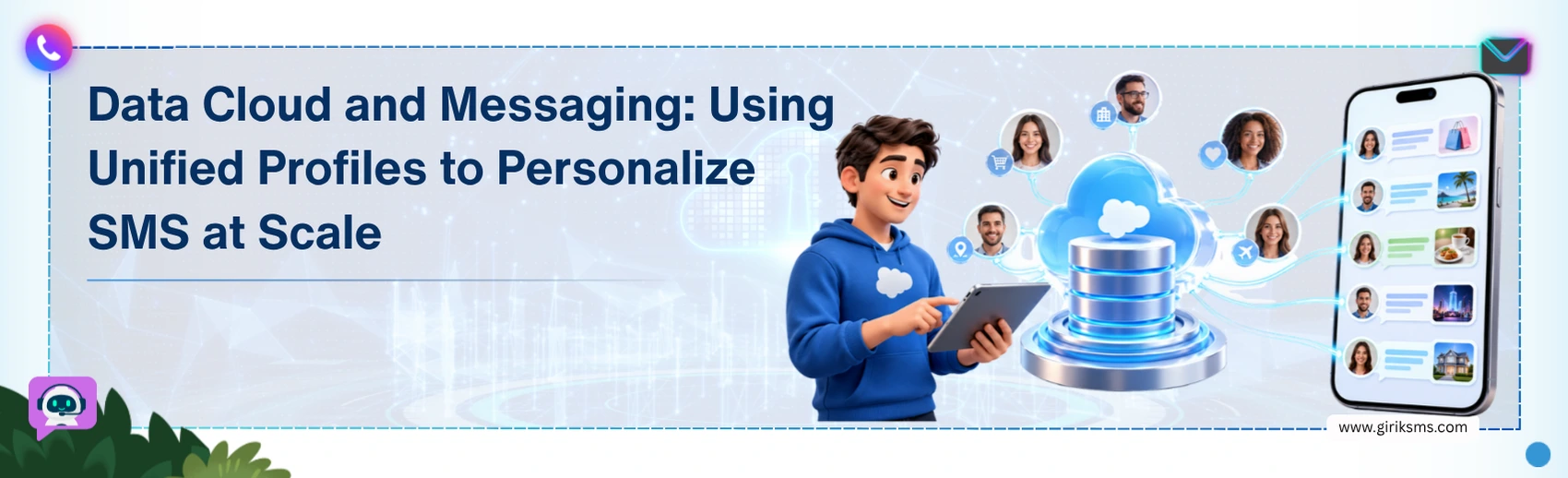
This is the case where businesses can put Data Cloud SMS personalization to work. Salesforce Data Cloud can bring customer data from different sources together, resolve it into unified profiles, and make that context available to messaging journeys. At scale, that context can shape the message itself.
What is Data Cloud SMS Personalization?
Data Cloud SMS personalization means using unified customer data to determine the eligibility of an SMS audience and pass relevant attributes to the messaging platform, rather than working from a manually maintained contact list.
A typical Salesforce environment holds customer data across several systems: CRM records, commerce transactions, loyalty activity, service interactions, and consent data. Data 360 ingests this information and uses identity resolution to associate records from different sources with a single unified individual.
For SMS, this creates a broader customer context. A retailer could identify customers who purchased running shoes in the last 30 days, belong to a specific loyalty tier, and have opted into SMS communications — using data from three separate systems in one audience definition.
Why Unified Profiles Matter
Customer data is frequently duplicated across systems. The same customer can exist as three separate records — one in the CRM, one in commerce, one in loyalty — each holding different information. Build a segment from any one of those records alone, and the audience reflects only part of the picture. Campaigns built that way miss interactions, duplicate contacts, or personalize from data that does not represent the full customer relationship.
Data 360's identity resolution matches source records and creates a unified representation of the individual. That unified profile becomes the foundation for unified profile texting: the SMS campaign uses the customer's combined data rather than a single source system.
A customer who recently purchased running shoes and holds Gold loyalty status can have both attributes available in one profile. The marketer builds the audience from those combined conditions, not from whichever system happens to hold the phone number.
Where Data 360 Fits
Data 360 is the data and segmentation layer. It does not replace SMS delivery or journey management that remains in Marketing Cloud Engagement. The architecture runs as a sequence:
Sources (CRM, web, etc) → Data Cloud (unify + identity resolve) → Segment/Audience → Activate to Marketing Cloud Engagement → Journey/Flow → Send SMS
This separation matters in Salesforce Data Cloud messaging because audience logic and customer data are managed upstream while messaging execution happens in the engagement platform. Salesforce documentation confirms that segments can be activated to Marketing Cloud Engagement using Unified Individual membership, with phone contact points and selected attributes passed through for personalization.
How to Implement Personalized SMS
01
Step 01
Connect the required data
Start with the fields the SMS campaign needs: customer identity, mobile number, SMS consent, purchase date, loyalty status. Map each to its source and establish data ownership before building anything else.
02
Step 02
Configure identity resolution
Define matching rules based on available identifiers: customer IDs, email addresses, phone numbers. Test against both matching and non-matching records. Incorrect matches can associate one customer's data with another's profile, which is as damaging as duplicate records.
03
Step 03
Build the segment
Create the audience from unified customer data and business rules. An audience built by segmenting SMS data in Data Cloud can change as the customer does. A running campaign, for example, might target customers who bought running shoes within 30 days, hold Gold or Silver status, have active SMS consent, and have not bought running socks in 14 days.
04
Step 04
Select the contact point
A unified individual may have phone numbers from more than one source. Define how the correct SMS contact point is selected and confirm that consent is active before activation. A valid phone number alone doesn’t qualify a customer to receive the message.
05
Step 05
Pass relevant attributes
Activate the segment with the attributes the messaging platform needs, such as first name, loyalty tier, product category, and recent purchase context. Audience rules determine eligibility; activated attributes support personalization. Separating those responsibilities allows easier implementation and troubleshooting.
A Practical Example
An apparel retailer wants to promote complementary products after a shoe purchase. The commerce system records the transaction. The CRM holds the customer profile. The loyalty system confirms Gold membership. Consent data confirms SMS eligibility.
Data 360 resolves these into a unified individual. The segment identifies customers who purchased running shoes within 30 days, hold the required loyalty status, have active SMS consent, and have not already purchased the complementary product. The activation passes first name, loyalty tier, and product category to Marketing Cloud Engagement. The messaging platform uses those attributes to send a relevant post-purchase SMS. Personalization started before the message was written.
Measuring the Implementation
Evaluate performance at both campaign and data levels. Campaign metrics cover delivery, engagement, conversion, and opt-out rates. Data checks should cover duplicate profiles, missing phone numbers, outdated consent, activation failures, and missing personalization attributes. When campaign performance drops, these checks help identify whether the issue sits in the message or earlier in the data and activation process.
Conclusion
Data Cloud SMS personalization connects unified customer data with SMS execution through a structured sequence: unify data, resolve identities, build the segment, select the contact point, activate attributes, personalize the message, measure results. The quality of the final SMS depends on the steps before activation. Clean identity resolution, reliable data, accurate consent, and well-defined segmentation are what allow personalized SMS to work consistently at scale.