




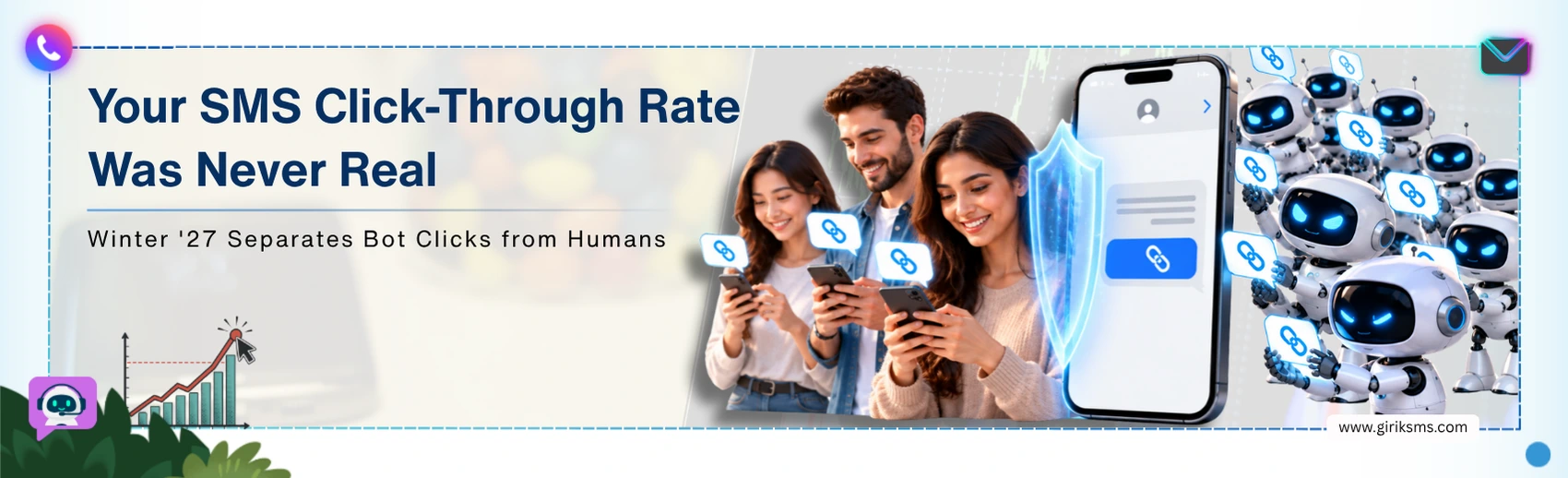
Your SMS campaign shows a 20% click-through rate. It looks like a strong sign of customer interest—until you ask, “Who actually clicked?”
A high click rate usually feels like good news, but some of those clicks never come from an actual customer. A messaging app may automatically access the URL to generate a preview, or maybe security systems check it before the customer even taps the message.
So, not every click in your report means a customer has actually engaged with your message. And if you rely on those clicks to measure campaign performance, it becomes difficult to know what the numbers really mean.
This is where Salesforce’s Winter ’27 updates become relevant. With more visibility into automated activity and SMS performance, marketers can get a clearer view of what sits behind the SMS click through rate.
A click tells you a link was accessed—but not necessarily that a customer chose to engage with it!
How SMS Bot Clicks Happen Even Before a Customer Taps
SMS bot clicks can happen before a customer ever taps the message. A security system may check the link. A messaging app may load it to build a preview. Other automated services can do the same in the background.
None of this requires the customer to interact with the message. But if those requests reach your tracking system, they can still show up as clicks.
Why Do Bots Click Your Links?
- Security scans: The links are tested for any threat before the link reaches the end user.
- Previews: Information from the link is obtained by the app to create a preview.
- Automated checks: Enterprise and cloud security systems may inspect links before allowing access.
For businesses using AI messaging on Salesforce, this is worth keeping in mind. When clicking data feeds into campaign decisions or customer journeys, not every recorded click necessarily represents customer engagement.
Why Your SMS Click-Through Rate Can be Misleading
A 10% CTR looks good on paper — but that number doesn't tell you where all those clicks came from.
Let’s suppose a certain marketing campaign got 1,000 clicks out of 10,000 messages — giving a 10% CTR. Sounds like a good figure—but the number doesn’t show who actually clicked on it.
That matters when the same data is being used to compare campaigns, identify engaged customers, build audience segments, or decide whether a campaign worked.
This is where SMS bot clicks can become a problem. They can push the SMS click through rate higher without adding any real customer engagement, making the raw number less useful on its own.
Why This Matters
An inflated CTR can make a campaign more engaging than it actually is — and once that number starts feeding into campaign decisions, the picture can get harder to read-whether you’re using it to shape your audience, compare messages, or decide what worked.
The issue isn't that the click data has no value. It's that a click needs context before it can be treated as a meaningful engagement signal.
Salesforce Winter 27 SMS Metrics: A Closer Look at What Counts as a Click
Winter ’27 makes a noticeable change to how SMS engagement can be read. Instead of treating every recorded click the same way — Salesforce is giving marketers more visibility into where that activity comes from and how it performs within their workflows.
Bot Click Detection: A Closer Look at SMS Clicks
Bot Click Detection for SMS is perhaps the most relevant change here. Automated mobile security filters can trigger link requests that look like clicks, even when no customer has interacted with the message.
SMS Performance Moves into Flow Builder
There’s also less need to look elsewhere for basic performance data. The Analytics tab in an active SMS Flow now shows delivery and engagement rates for “Send SMS Message” elements — keeping those numbers alongside the workflow itself.
Personalization Expands Across Channels
Winter ’27 also brings AMP script and Handlebars support to SMS, WhatsApp, and RCS. For teams already using these personalization tools, that means the same approach can extend across more messaging channels instead of being handled separately.
Taken together, these changes point to a simple shift in how SMS performance is being measured: the click count needs a little more context.
What Should Marketers Measure Beyond SMS Clicks?
The answer isn't to stop looking at clicks. It's to stop treating them as the whole story.
A campaign can have a high CTR and still tell you very little about what customers actually did. Bot-detected activity, delivery rates, engagement, and the actions that follow a message — all add context to that number.
That becomes especially useful when SMS is tied to real business outcomes—an appointment booked, a purchase completed, or a form submitted. Those actions tell you far more about customer response than the link being accessed.
So, SMS link tracking accuracy matters than cleaner reporting. It helps put the click back in context and gives marketers a better sense of whether the activity behind the number represents genuine interest.
The Bottom Line: A Better Click Starts with Better Context
A 20% SMS click-through rate may still look impressive. But some of those clicks may come from customers, while others are triggered by previews, security scans, or automated systems.
So, the number isn't necessarily wrong. It just doesn't tell you everything.
With Salesforce Winter ’27 bringing more visibility into bot activity and SMS performance, that distinction is becoming harder to ignore. A click is still useful—but perhaps not quite as straightforward as it once seemed.