

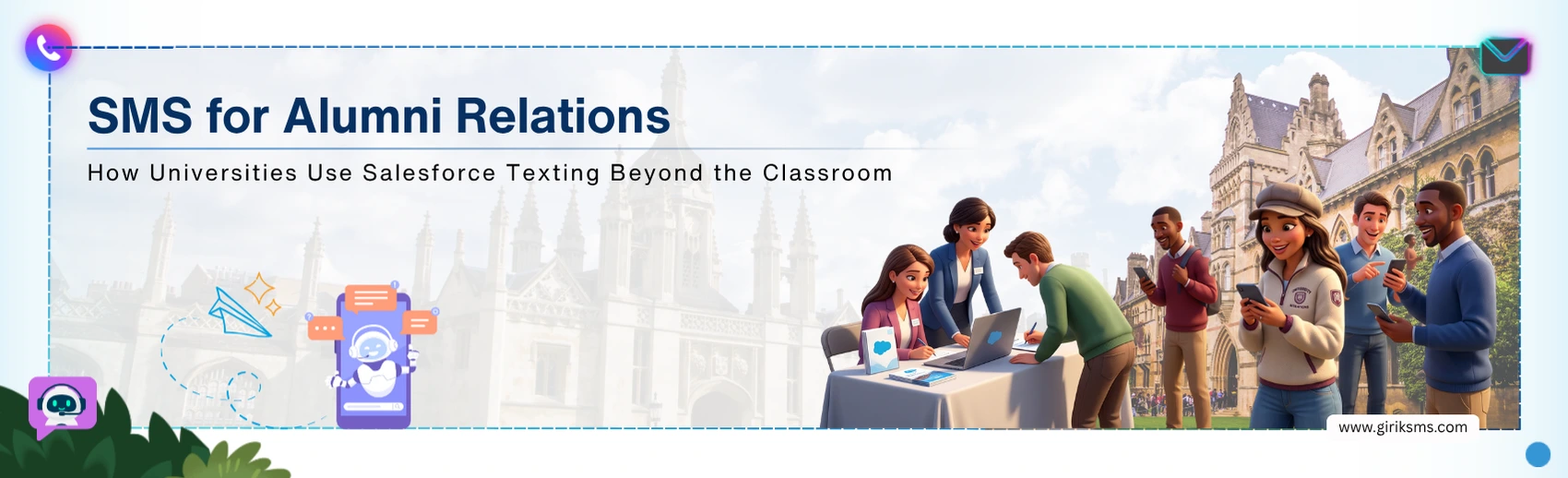
Universities have spent decades perfecting the alumni newsletter - layered over event invites, layered over annual fund mailers, layered over phone-a-thon calls that most graduates quietly dread. The whole stack still exists, and texting tool for alumni students within Salesforce environments is increasingly being layered on top of it, not to replace the older channels but because the older channels are quietly failing to reach people who moved twice since graduation and changed their email three times.
Worth flagging here: this is not a clean success story where SMS swoops in and fixes everything. The execution quality varies substantially, and universities that treat texting as just another broadcast channel tend to generate opt-outs fast.
Why Email Alone Has Stopped Carrying the Weight
Open rates on alumni email campaigns hover somewhere in the low-to-mid twenties on a good day - and that's for institutions with strong brand loyalty and well-maintained lists. The gap between that figure and SMS open rates, which consistently run north of 90% across industries, is the number that usually ends the internal debate about channel priority at most advancement offices.
That comparison gets cited a lot, and it does the actual work of winning budget conversations - but it skips some things worth knowing. High open rates mean nothing if the message lands wrong, or too long, or on a Tuesday when nobody asked to hear from their university. A lot of texting programs clear the open rate bar and then fall flat on everything after it, which is a different kind of failure than nobody opening the email.
Anyway. The underlying problem isn't really about channel selection. It's about data. Most Salesforce CRM instances at universities hold years of alumni interaction history - event attendance records, giving patterns, program affiliations, geographic clusters - and very little of that data was ever wired into outreach timing logic. SMS forced the issue because the medium punishes irrelevance more immediately than email does.
What Salesforce Actually Enables Here (and Where It Gets Complicated)
Flow handles the trigger logic pretty well. An alumna hits a five-year reunion milestone, or a donor lapses past a threshold the advancement team set, or a student crosses the finish line of their degree and enters the alumni database for the first time - all of those events can fire a personalized message without anyone touching a keyboard. The complication, and it's a genuine one, is that the actual message delivery sits outside Salesforce's native stack. Third-party SMS providers integrate through AppExchange or API connections, and the configuration between those two systems is where most projects drift.
Carrier registration requirements have gotten more complex since 10DLC rules tightened in the U.S. Universities running high-volume alumni campaigns need registered sender IDs, and the approval timelines for that - often six to eight weeks depending on the carrier - can catch teams off guard if they're trying to mobilize for a giving day or homecoming push on short notice.
The alumni engagement SMS conversation at most institutions usually starts in the advancement office and ends up pulling in IT, legal, and the data privacy team before anyone sends a single message. TCPA compliance isn't optional, and consent documentation for alumni texting requires more discipline than most schools initially expect. Getting that infrastructure right before launch matters more than the message copy does.
The Channels Where This Actually Works Well
Reunion planning is probably the most obvious use case, and also the one where SMS genuinely earns its place over email. Response rates for reunion event confirmations via text tend to outpace email confirmations significantly - partly because the message arrives while people are mobile, partly because the ask is simple and the reply is one word.
Giving day campaigns are more complicated. Donor outreach texting Salesforce workflows can coordinate a timed sequence - an early awareness message, a mid-day progress update, a final-hours push - and when those are personalized to a donor's previous giving level or affinity program, they perform meaningfully better than generic blasts. The timing of the sequence matters a lot, and teams that set it and forget it tend to see diminishing returns by the third message.
Career and networking events are an underused area. Alumni who opted in for career programming - mentoring initiatives, industry networking nights, job posting notifications for recent graduates - represent a high-engagement segment that actually welcomes relevant texts. The mistake most advancement teams make is treating that segment the same as the general alumni pool.
A Practical Framework for Sequencing an Alumni SMS Program
This is roughly the order that works, based on how programs that didn't collapse in the first year tend to be structured:
- Consent infrastructure first - retroactive opt-in campaigns for existing alumni before any outreach begins, with clear documentation of how consent was collected and when. Skipping this is where legal problems originate.
- Segment before you message - using Salesforce data to create meaningful audience groupings (recent graduates, major donors, regional chapters, event attendees) before touching the send button. Untargeted mass texts to full alumni databases tend to generate opt-out spikes that permanently damage list quality.
- Start with event-triggered messages rather than campaigns - reunion reminders, event confirmations, thank-you messages post-donation. These feel natural and relevant, and they build trust with the channel before the ask-heavy campaigns begin.
- Build the reporting loop back into Salesforce - response rates, opt-out rates, conversion to donation or event registration, all feeding back into the CRM so that subsequent campaigns can be refined against real data rather than assumptions.
- Expand to proactive campaigns only after the triggered messaging is stable and the opt-out rate has settled into a comfortable baseline. Jumping straight to giving day blasts without this foundation is usually where programs go sideways.
What the Data Layer Looks Like in Practice
| Program Stage | Primary Data Source | SMS Trigger Logic | Expected Response Pattern |
|---|---|---|---|
| Onboarding new alumni | Student records at graduation | Automated welcome sequence | High open rate, low reply volume |
| Reunion outreach | Event calendar + class year data | Date-proximity trigger | Moderate open, high reply rate |
| Giving day campaigns | Donor history + segment tags | Scheduled sequence with gaps | Variable - depends on personalization depth |
| Career programming | Opt-in interest tags | Event-based trigger | High engagement in opted segment |
| Lapsed donor re-engagement | Giving history + lapse threshold | CRM-triggered at interval | Lower open, but higher conversion on responders |
The lapsed donor row in the table above is worth calling out specifically. Universities often over-index on this segment early in a texting program because the potential revenue recovery looks attractive. In practice, lapsed donors who receive a text before re-establishing a relationship through another channel first tend to opt out at higher rates than other segments. The sequencing matters more than the message.
SMS Software for Alumni: Choosing the Right Platform Integration
There are quite a few SMS vendors on the AppExchange that connect with Salesforce Education Cloud and the Nonprofit Success Pack, and their feature comparison pages tend to look more different from each other than they actually are once you're inside the configuration. The things that don't show up cleanly on comparison pages - how consent management actually works under pressure, whether opt-out data surfaces in real time back to Salesforce records, how the platform holds up when homecoming or end-of-year giving spikes the volume - those are what determine whether an implementation stays functional or turns into a support ticket backlog.
Some platforms handle two-way conversations well, which matters more than it sounds. Alumni who reply to a text - asking about parking for a reunion, or confirming attendance for a networking event - need those responses routed somewhere. If the workflow dead-ends at a send-only number, the experience breaks immediately and the trust built by a personalized message evaporates.
Honestly, the vendor selection conversation at most universities gets dominated by price and by whoever already has a relationship with the IT department. That's not necessarily wrong, but it does mean that compliance features and two-way routing capabilities - which are the things that determine whether the program survives beyond year one - often get evaluated too late.
A Few Observations Before Anyone Gets Too Comfortable
Universities that build thoughtful, consent-first, segmented alumni SMS programs do see real returns - on event attendance, on giving day performance, on reunion registration rates. The channel works when it's used with restraint and with real data behind it.
What's harder to predict is how alumni attitudes toward texting from institutions will evolve over the next few years. Consumer opt-out behavior is still shifting. Carrier regulations keep tightening. And the definition of "relevant" for a 45-year-old alumnus versus a 2023 graduate is wide enough that a single program design probably can't serve both well. That's not a reason to avoid the channel - it's just a tension that most advancement offices haven't fully resolved yet, and probably won't for a while.